
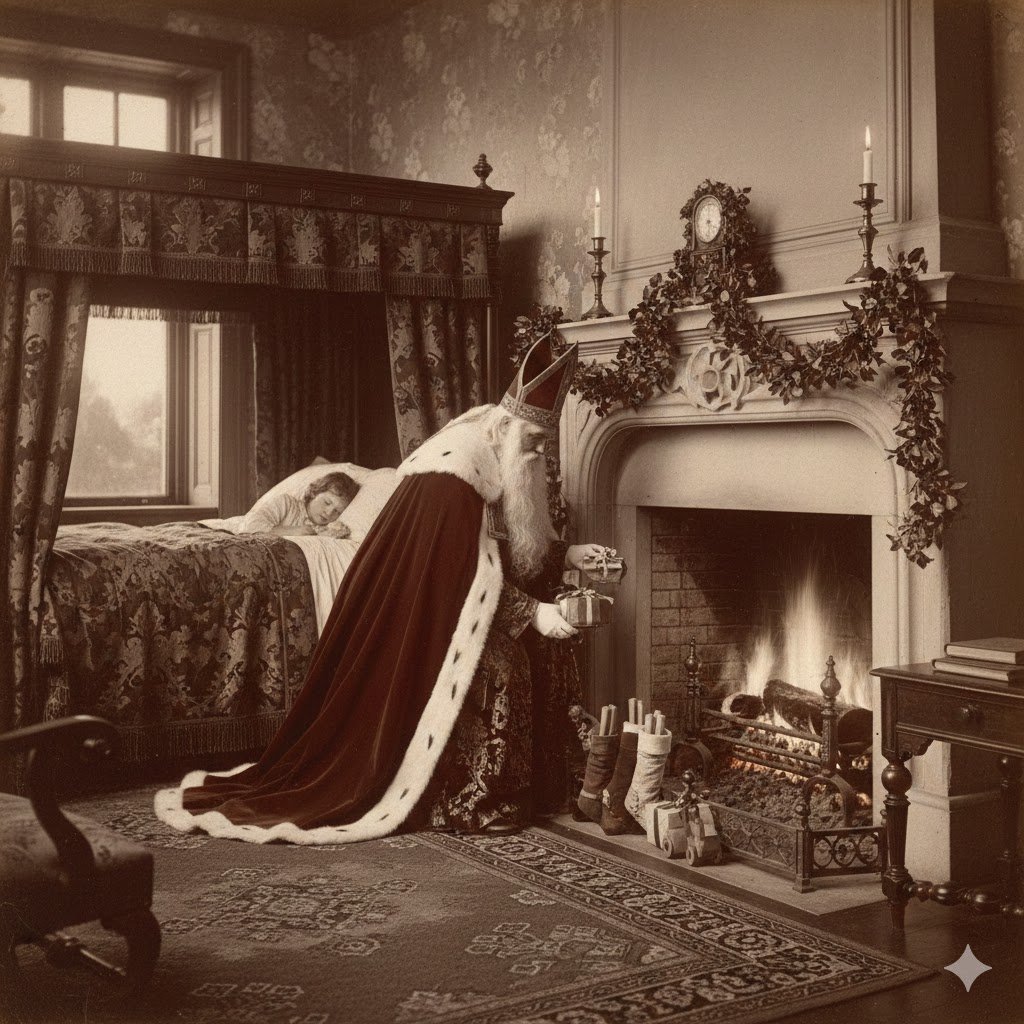
There’s something wonderfully grounding about discovering the real person behind our beloved Santa Claus. St. Nicholas of Myra, a fourth-century bishop in what is now Turkey, wasn’t a jolly figure in a red suit but a man of profound compassion whose legacy has shaped Christmas for over a millennium.
What moves me most about Nicholas is his quiet generosity. The most famous story tells of a poor man with three daughters who faced a heartbreaking future without dowries. Nicholas, learning of their plight, secretly tossed bags of gold through their window on three separate nights, saving the family from destitution. He didn’t seek recognition or gratitude. He simply saw a need and met it with extraordinary kindness.
This is the essence of Nicholas that I find so relevant to our modern celebrations. In our age of wish lists and overnight shipping, his example reminds us that the truest gift-giving happens when we notice what others need, not just what they want. It’s about paying attention to the struggling neighbor, the overwhelmed friend, the child who feels invisible.
The tradition of leaving gifts in stockings hung by the fireplace? That comes from those bags of gold, said to have landed in stockings drying by the hearth. Even our December 6th celebrations of St. Nicholas Day in many European households connect us to this ancient thread of generosity.
As we navigate another Christmas season, perhaps we can channel a bit of Nicholas’s spirit. Not the commercialized version, but the original: a person who gave anonymously, acted with compassion, and understood that true generosity asks nothing in return. That’s a tradition worth keeping alive by our own hearths, don’t you think?